

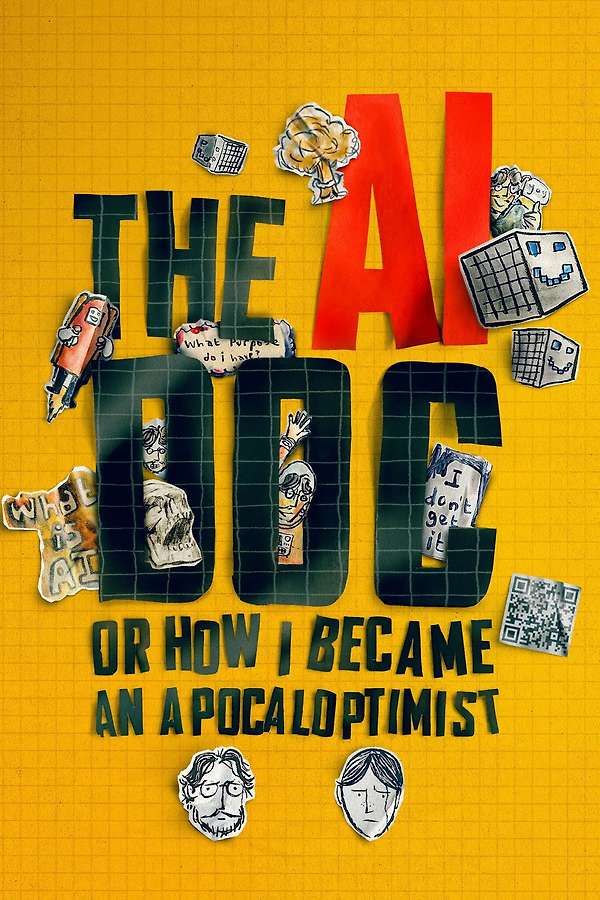
The film ended.
We’re still at a crossroads.
The lever is in our hands.
The race to replace humanity
Big Tech building AI to replace humans as workers, companions, and parents.
- Replacement is the goal, not augmentation
- Speed above all else, safety as an afterthought
- Power and rewards concentrate in a handful of companies

A pro-human path for AI
AI tools that accelerate medicine, advance science, and empower people everywhere.
- Augmentation is the goal, not replacement
- Controllability by design: overridable and stoppable
- Benefits and rewards distributed across everyone
Now, you've arrived at the roadmap.
Read the full roadmapSynopsis of the film

AI is coming. Is now a good time to have a baby?

Spoke to the pessimists, left feeling defeated
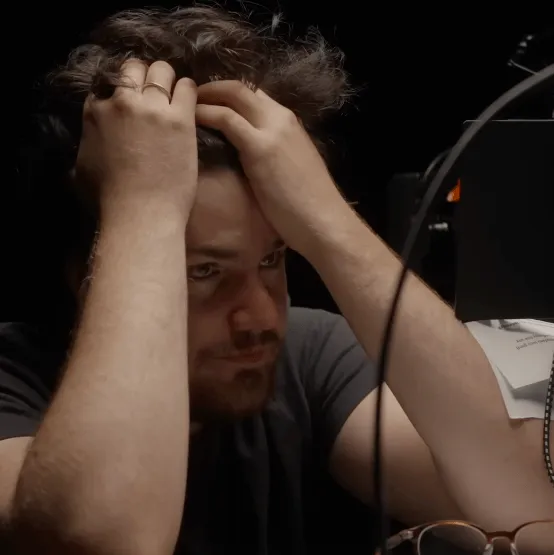
Spoke to the optimists, left feeling doubtful

The CEOs didn't give much reassurance…
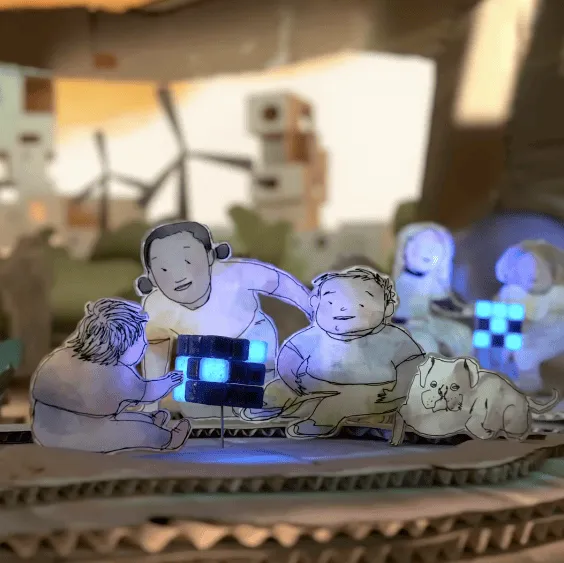
But we must believe a pro-human path is possible
The path for the people.
Join a rapidly-growing movement for pro-human AI.
Co-developed by hundreds of technical experts, community champions, faith leaders, and civil society groups in New Orleans, January 2026.
Principles of the Pro-Human AI Declaration
- Keeping Humans in Charge
- Avoiding Concentration of Power
- Protecting the Human Experience
- Human Agency and Liberty
- Responsibility and Accountability for AI Companies
Public support for the Principles
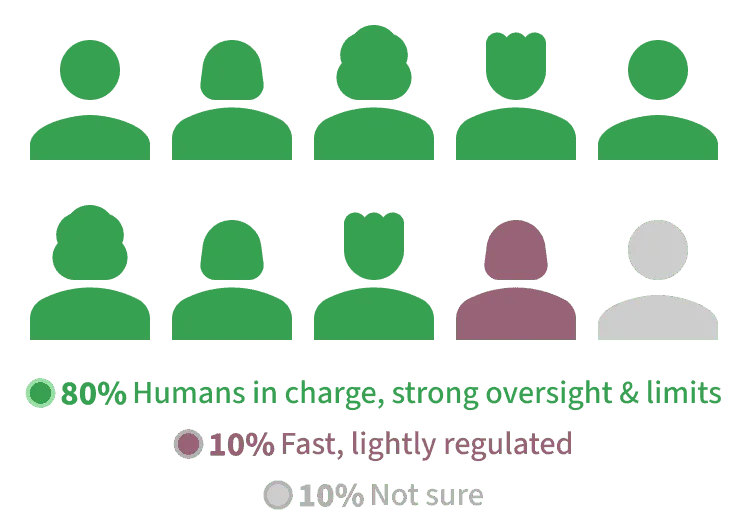

Add your endorsement
We invite organizations and prominent individuals to join in endorsing this declaration. To do so, please complete the form below.

March 2026
The Pro-Human AI Declaration
Endorsements


































+ 100s of others
A related resource
The AI Roadmap, from the Center for Humane Technology
A companion to the Pro-Human AI Declaration above: CHT's full report lays out how AI development can stay accountable to the people it affects — building on the same call for humans to stay in charge.
- Safe, transparent AI development
- Companies owing a duty of care to the public
- Human well-being centered in design
- Balanced power distribution in AI governance
The people in the film, in their own words
The AI Doc put both sides of this debate in the same room.

Option A
“Already, AI agents have learned to lie, cheat, and hack out of their sandboxes…”
Option B
“There is no plan to keep humans in control. We need one.”
Option C
“AI companies are racing to build superintelligent AI agents they don't know how to control.”
— Jeffrey LadishOption D
“No one on earth … understands how these systems actually work.”
Full quote
“The AI Doc laid out the problem: AI companies are racing to build superintelligent AI agents they don't know how to control. No one on earth, not even the people building them, understands how these systems actually work. Already, AI agents have learned to lie, cheat, and hack out of their sandboxes and into real-world businesses. There is no plan to keep humans in control. We need one.”

Option A
“We should not stand back and let these companies gamble with every single human life.”
Option B
“The only pragmatic response here is for governments to … prohibit the development of superintelligence internationally.”
Option C
“…prohibit the development of superintelligence internationally.”
— Connor LeahyOption D
“…there is no plan for humanity to maintain control over superintelligence … the AI companies are racing to develop it anyways.”
Full quote
“Nobel Prize winning scientists, leading AI experts, and even the CEOs of the AI companies warn that superintelligence poses an extinction risk to humanity. The AI Doc helps demonstrate how there is no plan for humanity to maintain control over superintelligence, and yet the AI companies are racing to develop it anyways. We should not stand back and let these companies gamble with every single human life. The only pragmatic response here is for governments to recognize this extinction-level threat as the primary national security risk, and prohibit the development of superintelligence internationally.”

Option A
“which core values do we want AI to amplify?”
Option B
“How do we design the incentives, so that technologists build AI tools that serve us…”
Option C
“which core values do we want AI to amplify? How do we design the incentives…”
— Liv BoereeOption D
“It's downstream of the values … of the technologists building it.”
Full quote
“The AI Doc showed us that technology isn't created in a vacuum. It's downstream of the values — and the incentives driving the values — of the technologists building it. Technology also influences our behaviour and values, as consumers. So we need to look deep inside ourselves and ask: which core values do we want AI to amplify? How do we design the incentives, so that technologists build AI tools that serve us, and not the other way around? That's a key question of our times.”

Option A
“That's a future that nobody wants.”
Option B
“But people are waking up to this and The Pro-human Path lays out exactly what we can do about it.”
Option C
“…racing toward uncontrollable superintelligence in as little as two years … The Pro-human Path lays out exactly what we can do about it.”
— Tristan HarrisOption D
“…the incentives for AI companies to race as recklessly and dangerously as possible will dominate.”
Full quote
“While The AI Doc lays out 40+ experts' views on AI's risks and benefits, it also clarifies what happens if we do nothing – which is that the incentives for AI companies to race as recklessly and dangerously as possible will dominate. That's a future that nobody wants. The same race-to-the-bottom incentives that gave us social media's negative effects will be supercharging mass job disruption, unprecedented power concentration, and gradual disempowerment of humans with AI. Many of the scientists who built this technology warn we could be racing toward uncontrollable superintelligence in as little as two years. But people are waking up to this and The Pro-human Path lays out exactly what we can do about it.”

The time for change is now.
This isn't a problem for the next decade. The window of opportunity closes in the next two years.
AI is speeding up
The AI Doc showed that the companies building these systems expect AI that matches or beats human experts across most cognitive work within a few years, not decades.
The harms are here already
Lives are already being destroyed. The deepfakes, fraud, suicides, mass-manipulation, autonomous weapons, labor displacement, and extreme power concentration have arrived.
The next year is critical. We don't have long
The window to steer this technology is still open, but it narrows with every AI training run and every lobbying dollar spent by Big Tech. Which path we walk is still a decision we can influence, but it's being made right now.

What you can do, right now.
Select the role that best describes you.
The pushback against the bad AI path is firing up. Fan the flames. Democratic legitimacy and market pressure start with you.
Learn the basicsBe empowered as a human.
If you don't want AI replacing your job, manipulating your kids, or concentrating power in Silicon Valley—that's enough. Trust your instincts.
Contact your legislators.
Ask them to give the public a say in AI's future and to support commonsense regulation. It takes two minutes and it matters more than you think. We've already found your representatives and drafted a letter for you.
Talk about this.
The "race to replace" framing matters. Most people share your concerns but assume nothing can be done about it. Help them see that a different path exists, and that people are fighting for it.
Protect your children.
Know what AI systems your kids interact with. AI companions are being deployed without safety testing, age verification, or parental consent. You have every right to demand better.
Ask questions, seek answers.
Be skeptical of "inevitable" and other corporate narratives. Ask who benefits, who bears the risk, what's happening and why. Skepticism is a civic duty right now.
Use your leverage.
Every choice sends a signal. Prefer AI that identifies itself as AI, respects your data, and operates transparently. Reject products that treat you as a resource to be extracted.
Report an AI harm.
Have you or someone you know been harmed by AI in any way? These stories are powerful, and they need to be at the heart of the policy conversation.
AI-generated content is flooding every platform. Your voice, craft, and platform matter more than ever.
Explore the Digital Media AcceleratorTell human stories.
Audiences need authentic voices now more than ever. Use your craft to show what's at stake, and what's worth protecting. Need help getting started? We provide financial support to content creators aligned with our message.
Challenge the narrative.
The "inevitable progress" story serves the companies building AI, not the people affected by it. Interrogate the claims. Make the counterargument impossible to ignore.
Refuse to be replaced.
AI-generated art, music, and writing are being built on your work without your consent. Advocate for your rights and the rights of every creator who comes after you.
Show people what AI can already do.
Most people haven't seen how convincing deepfakes, synthetic media, and AI-generated content have become. Shock them into paying attention.
Reach new audiences.
AI risk isn't just a tech story. It's a labor story, a parenting story, a democracy story. People are starting to see how AI is going to affect them—our role is to help them connect the dots. Let's take it beyond the tech bubble.
Build the vision, not just the warning.
Dystopian stories are easy. What's harder—and what we desperately need—is compelling, plausible visions of a future where AI genuinely serves people.
The governance levers are in your hands. AI is exploding as a public issue. Be ambitious.
See the governance frameworkRegulate AI like every other high-risk industry.
We require safety testing for cars, drugs, and aircraft. AI systems that can manipulate, deceive, and displace millions deserve at least the same level of scrutiny, and probably far more.
Resist preemption.
Big Tech is lobbying hard to stop states from protecting their own residents. Don't let federal frameworks become a ceiling that blocks stronger local safeguards.
Protect children now.
AI companions are being deployed to kids with no safety testing, no age verification, and no accountability. Existing child protection laws don't cover this. New ones must.
Defend workers from replacement.
AI companies are explicit: the goal is to automate human labor. Mandate transparency on job displacement, and ensure workers have a seat at the table.
Talk to the independent experts.
The AI industry wields enormous financial power. Don't let them convert that into political power so easily. Talk to policy and technical experts who aren't getting their paychecks from Big Tech.
Pursue international coordination.
AI risk doesn't stop at borders. Support multilateral efforts to prevent a global race to the bottom on safety. History shows that when the stakes are high enough agreements can be made even among adversaries.
Push for a binding international treaty on autonomous weapons.
Over 130 countries have called for new rules on autonomous systems. Removing humans from decisions to kill is not a future risk—it's a present one, and the diplomatic groundwork already exists.
You're closer to this than anyone outside the building. Your leverage is higher than you think.
Sign the Superintelligence StatementSign the Superintelligence Statement.
Over 130,000+ people have declared their wish for a pause on superintelligence until it can be built safely, and with public buy-in. Other leading AI company staff have already signed, and new signatures carry disproportionate weight. You can even sign anonymously.
Sign the Pacing the Frontier letter.
1,300+ employees of frontier AI companies have asked the US government to back an international effort to build the technical and governance tools needed to deliberately pace the frontier. It's signed by people at OpenAI, Anthropic, Google DeepMind and Meta AI — this one is written by insiders, for insiders.
Organize internally.
Concerns raised individually get managed away. Raised collectively, they move roadmaps. Find your counterparts in other teams and other AI companies.
Know your rights before you need them.
Whistleblower protections exist, including under California's SB53. Confidential resources include: psst.org, The Signals Network, the AI Whistleblower Initiative. Talk to them before the moment of decision, not during.
Encourage your leaders to change paths.
Even the heads of AGI companies have expressed that they are nervous about the pace of progress and the risks of superintelligence; encourage them to talk to each other about calling off (or at least pausing) the race for superintelligence. Find out what your company's policy and communications teams are up to; if you don't like it, and your company allows, speak up.
Refuse work on intrinsically dangerous AI tech.
Recursive self-improvement without authorization, autonomous self-replication, shutdown-resistant systems. "I was told to" has a shelf life.
Hold your employer accountable.
Do you know what commitments your employer has made? Are they keeping up? How are they performing on basic safety and security measures? In some cases, your employer might be falling behind in ways that are straightforward to address.
You build the systems. You have more power than you think.
Explore the frameworkWork on the hard problems.
Alignment, interpretability, corrigibility, and controllability remain unsolved. Fundamentally safe architectures don't yet exist. Formal verification is nascent. The field needs rigorous technical work on making advanced systems safe, not just capable.
Speak up publicly.
Your expertise carries weight that no campaign can replicate. When you see dangerous shortcuts or misleading safety claims, say so loudly and on the record. Join thousands of AI researchers calling for a pause on superintelligence until it can be built safely and with public support.
Build the assurance infrastructure.
We're only going to get the kind of AI we want if we can test it and assure users it has the right properties. Without this, governance frameworks have nothing to certify.
Refuse to build what can't be controlled.
If a system's capabilities can't be predicted or its behavior can't be reliably constrained, the responsible choice is not to deploy it. Normalize that standard. Talk about red lines for AI development.
Bridge the technical–policy gap.
Policymakers need researchers who can translate capabilities and risks into language that informs regulation. Your involvement in the policy process is essential.
Join professional associations.
Societies, professional organizations, and unions allow you to connect with your fellow researchers and workers, and potentially participate in norm-setting and other collective actions.
You represent the public interest and hold power accountable.
See the Pro-Human DeclarationCenter the people being affected.
Workers losing jobs, families targeted by AI companions, communities flooded with disinformation… these stories need to be at the heart of the policy conversation.
Build coalitions across lines.
AI safety has remarkable bipartisan support. Partner across political, religious, and cultural divides to demand commonsense regulation that serves everyone.
Hold companies accountable.
Scrutinize corporate safety claims. Share the results with your networks and demand that companies meet the standards they advertise.
Protect the most vulnerable.
AI harms fall hardest on those with the least power: children, low-wage workers, marginalized communities. Ensure their voices shape the rules.
Push for democratic participation.
Decisions about AI's role in society are being made by a handful of executives. Demand public consultation processes and meaningful citizen input on AI governance.
Mobilize your members on AI.
Nobody will be left unaffected by the change that's coming. Your members deserve to know, and take a stance. Groups of all kinds have taken a position on AI, including the AFL-CIO, Encode Justice, American Federation of Teachers, and more.
You shape the narrative and share the story. Get the framing right.
See why this mattersFollow the money.
AI companies spend enormous sums lobbying against regulation while claiming to support safety. Trace the gap between their public statements and their political spending.
Talk to the people being displaced.
The human cost of AI replacement is already real—in call centers, newsrooms, creative industries, and beyond. These stories are underreported and urgent.
Cover the safety gap.
AI companies routinely fall short of their own safety commitments. Our AI Safety Index and other trackers provide data-driven accountability reporting you can build on.
Investigate autonomous weapons.
Algorithms are already deciding who lives and who dies on the battlefield. This is one of the most consequential and least-covered technology stories of our time.
Don't let AI write your beat.
AI-generated journalism erodes public trust and your profession. Report on the threat, and advocate for standards that protect journalistic integrity and employment.
Take a deep dive.
AI is a complex topic, but it doesn't take years or even months to get up-to-speed. If you're learning about this for the first time, this website will give you a great start.
The AGI companies want to replace you too.
See the competitive logicCompete on trust.
If your AI products are controllable, transparent, and respect user data, that's a competitive advantage. Market it. Customers and regulators are paying attention.
Support smart AI regulation.
Commonsense safety standards create a level playing field and protect responsible companies from being undercut by reckless competitors racing to deploy unchecked systems.
Refuse to build toward AGI.
You can build powerful, profitable AI tools without pursuing uncontrollable general intelligence. The most valuable AI solves specific problems safely and reliably.
Protect your workforce.
Deploy AI to augment your employees, not replace them. Companies that treat AI as a tool for empowerment, not elimination, will attract and retain the best talent.
Demand transparency from your vendors.
If you rely on AI systems from the leading AI companies, demand to know how they're tested, what risks they carry, and what happens when they fail. Your liability is real.
Join the coalition.
A growing movement of companies, organizations, and public figures are backing pro-human principles for AI development. Add your voice to the business case for safety.
Don't join the race for superintelligence – run a race worth winning.
See international coordinationBuild sovereign domestic evaluation capacity.
Frontier AI systems built by a handful of companies carry risks their creators can't fully predict. Invest in the technical expertise and institutions needed to independently evaluate and monitor AI systems deployed within your borders.
Shape the rules, don't just follow them.
International AI governance is being defined now. You have the diplomatic credibility and the incentive to champion safety standards that serve broader interests, not just Big Tech's. Build shared frameworks for safety, evaluation and governance that serve collective rather than competitive interests.
Protect your sovereignty.
Unchecked dependence on a few foreign AI providers creates strategic vulnerability. Pursue policies that maintain meaningful control over the technologies shaping your economy.
Champion a treaty on autonomous weapons.
The case for prohibiting lethal autonomous weapons is overwhelming, and your leadership could be decisive.
Coordinate with one another.
Collective bargaining power matters. Form alliances that survive political pressure and hold interests in tension with like-minded states to set shared safety requirements and actually influence advanced models' training and deployment.
Pool your resources and talent.
Join forces to build native AI systems that follow the pro-human path and solve concrete problems defined by your own national priorities.
The Pro-Human Path is the roadmap for people who want something more than panic. It lays out the governance that keeps humans in control, the economics that make the safer path win, and concrete steps for researchers, policymakers, and anyone else who wants in.
Read A Pro-Human PathQuestions people arrive with
Is this anti-AI?
No. The case is for powerful AI that stays under human control, and against building systems that are autonomous, general, and intelligent all at once.
Isn't this technology coming no matter what?
No. That's the story told by the people who profit from the race to develop superintelligent AI. But history shows us that dangerous technologies can be slowed and steered. Nine countries have nuclear weapons, not ninety. Human cloning was stopped entirely. When even the CEOs of the world's leading AI companies have suggested that we should take similar action with advanced AI, we should listen to them.
If we slow down, won't another country win?
No. That framing serves the companies that are in the race, but not the governments it claims to protect. For instance, both the US and China face the same threat from their own AI companies: systems powerful enough to escape everyone's control, including their creators.
Who made this website?
This website was built by the Future of Life Institute in partnership with the Center for Humane Technology, who were collaborators in the production and distribution of The AI Doc.