The Pro-Human Tool Framework
A comprehensive approach to AI that keeps humans in charge
Even if not always explicitly or intentionally, the current trajectory of AI development treats human replacement as the goal and safety as an afterthought. This framework describes a different path: AI systems designed from the start to be controllable, beneficial, and trustworthy. Powerful AI that extends what humans can do, with humans remaining in charge.
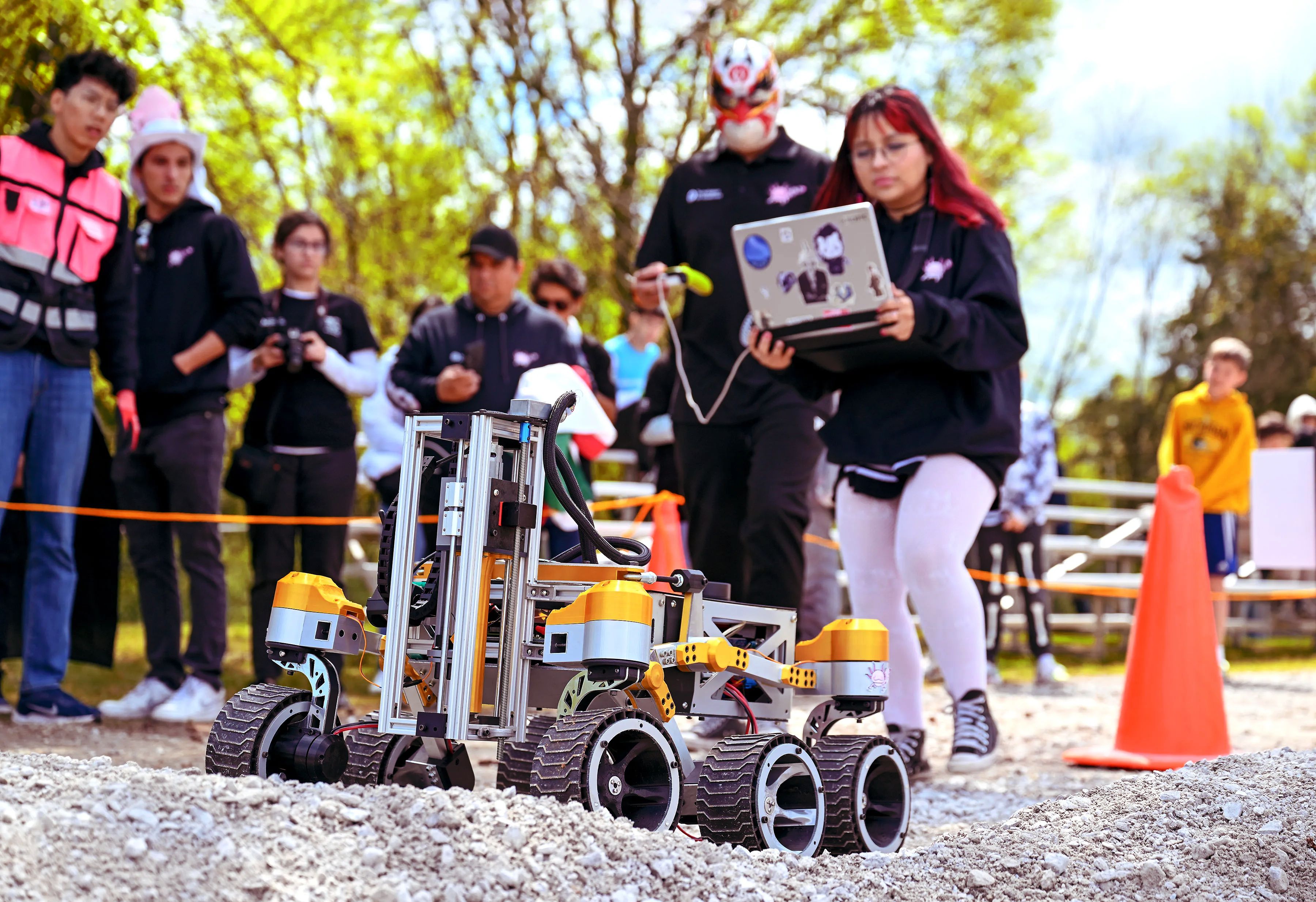
NASA's Human Exploration Rover Challenge encourages student teams to build machines that are steered manually. However, the contest participants incorporate tool AI into the design process using AI-driven CAD software and simulations. The participants are also challenged to create rovers with narrow AI capabilities such as obstacle avoidance and autonomous tasks assigned to the rover such as soil sample collection. (Image by Charles Beason / NASA.)
Building on Existing Work
This framework builds on ideas from multiple research traditions, including Comprehensive AI Services (Drexler), AI as Normal Technology (Narayanan & Kapoor), Domain-Specific Superintelligence (Beloza et al.), The AI Scientist (Bengio et. al), Guaranteed Safe AI (Dalrymple et al.), Pro-worker AI (Acemoglu et al.) and the Pro-Human Declaration.
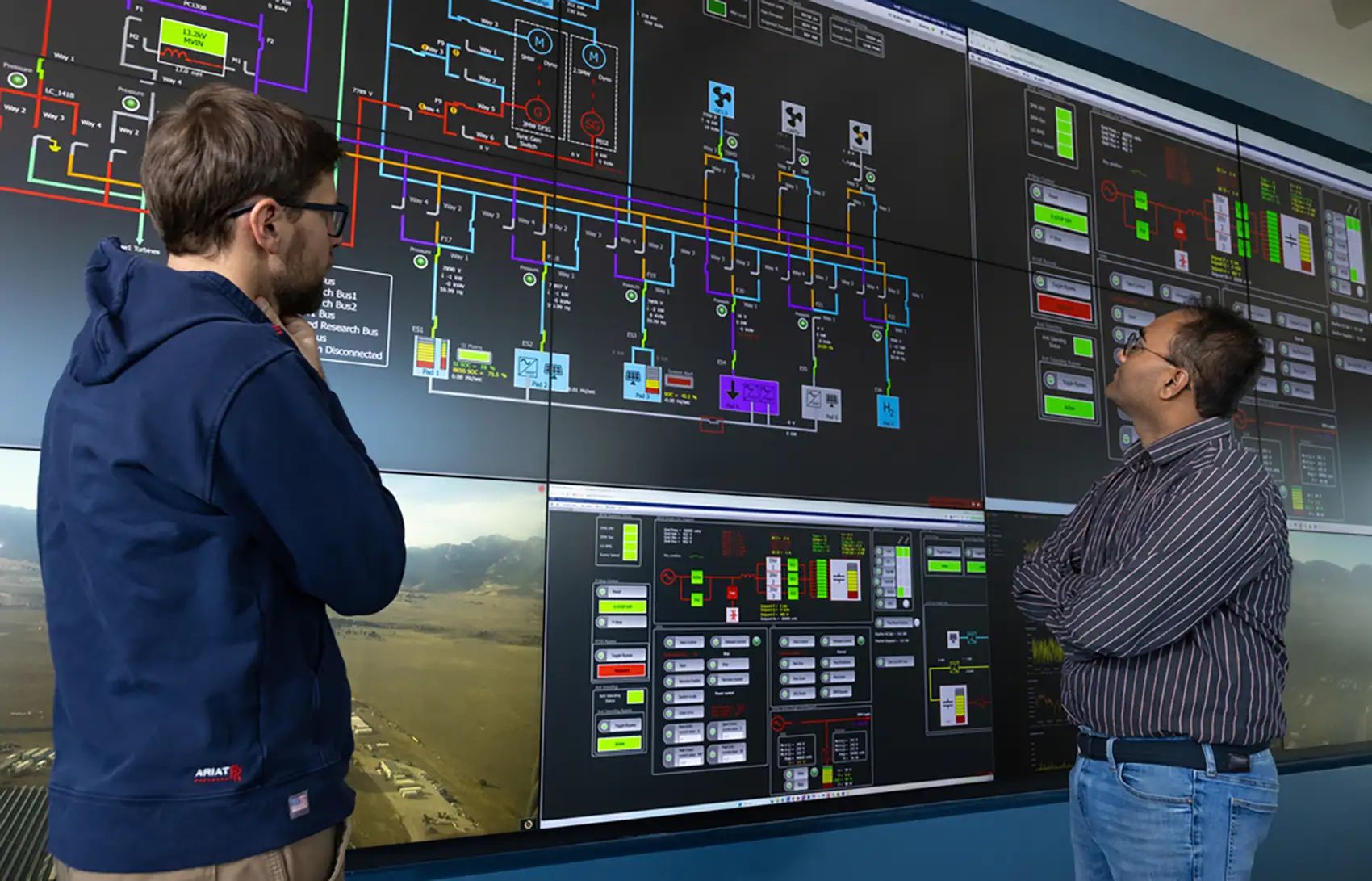
NLR (National Laboratory of the Rockies) staff Przemslaw Koralewicz, left, and Shahil Shah collaborate on how to better assess risk between data centers and the grid. (Image by Agata Bogucka / National Laboratory of the Rockies)
Choosing constraints
AI capability – like that of humans – has many aspects and we can purposefully develop systems that are strong in some aspects while limiting others. A system can be highly intelligent and remain under human direction.
Empowering humans
The goal of the Pro-Human Path is AI that increases human agency – our capability to understand, decide, and act in the world – rather than increasing the agency of AI systems which can then take our place.
Avoiding the danger zone
The A-G-I framework makes this concrete, showing how Autonomy, Generality, and Intelligence are distinct dimensions. The dangerous zone – for large-scale risks as well as wholesale human replacement – is where all three are high.
Three Components
The Pro-Human Path framework has three interlocking parts. Each addresses a different question:
Is this system a controllable extension of human agency?
Does this system serve human interests?
Can we verify that it does what we intend?
All three components are necessary. A system could be "aligned" but disempowering. It could be reliable within narrow bounds but still hurt society. It could be well-intentioned but impossible to verify.
Control
Fundamentally, Tool AI is AI under meaningful human control, with assurances that scale with capability.
Tool AI also implies a cluster of properties: purpose-driven design, bounded scope, low autonomy, modularity, and complementarity with human capability. These properties are what makes verification possible and control meaningful.
Humans can understand what the system does, modify its goals, enforce boundaries, override its decisions, and shut it down. The system is designed to be directed.

The ReCell Center leverages tool AI for diagnostics, modeling, disassembly and sorting in its battery recycling research and development at Argonne National Laboratory. (Image by Argonne National Laboratory.)
Purpose
Technology designed to support human flourishing rather than replace, manipulate, or diminish humans.
Control alone is insufficient. A well-controlled system could still be used against human interests, to manipulate, exploit, or concentrate power. Human-Empowering AI addresses what the system is for.
The framework draws on the Pro-Human Declaration, which articulates principles across five pillars: keeping humans in charge, avoiding concentration of power, protecting the human experience, preserving human agency and liberty, and ensuring responsibility and accountability.

Col. Byron Faler, MD, staff surgeon monitors robotic surgery. A nearby surgeon remotely operates the DaVinci Xi Robotic Endoscope. The system uses narrow tool AI to filter the surgeon's hand tremors and provide augmented reality overlays, empowering the surgeon without stripping away human responsibility. (Image by John Corley / RELEASED.)
Verification
Systems whose behavior can be verified, understood, and relied upon. Through evidence, not faith.
Trustworthy AI means warranted confidence based on evidence: technical verification, institutional oversight, and legal accountability. The goal is to make AI systems trustworthy, so that trust is deserved.
Trustworthiness requires that systems are safe, secure, reliable, transparent, and (where applicable) fiduciary to the user. Assurance requirements scale with capability and risk: a simple tool needs minimal verification; a system making medical recommendations needs much more.
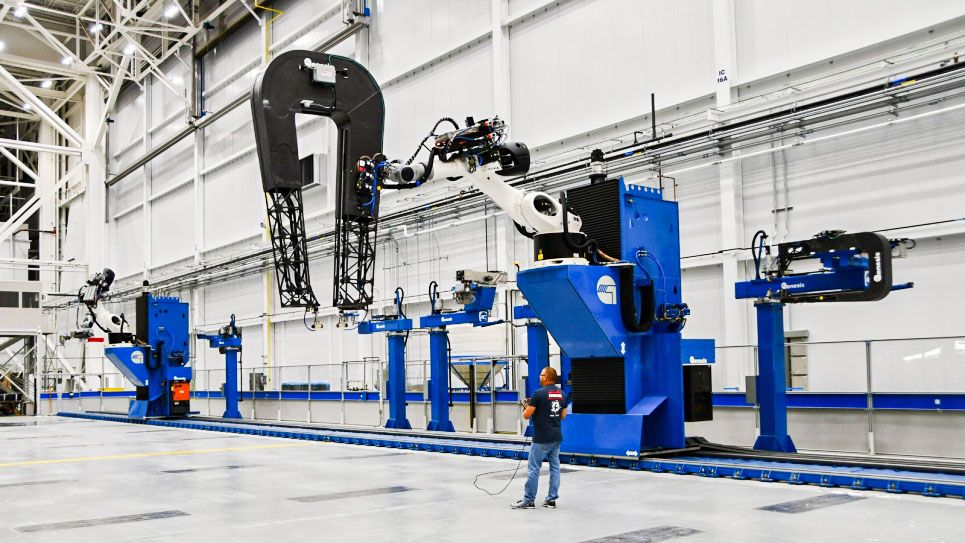
At Spirit Aerosystems, an ultrasonic-equipped robot arm scans massive datasets and highlights material defects to trained human inspectors. This strictly narrow AI reduces waste, optimizes human workflows, and keeps high-stakes safety decisions firmly in human hands. (Image by Spirit AeroSystems.)
Three essential components of the 'Pro-Human Tool AI' framework:
Tool
AI
Controllable systems built for specific tasks with limited scope are far easier to verify and audit
Pro-Human
AI
The Pro-Human standard specifies what purposes are worth building toward, and sets red lines
Trustworthy
AI
Verified, reliable AI builds the trust humans need to benefit from it in important real-world applications
Tool AI's properties make it more pro-human & enable trustworthiness
A system designed for a specific purpose and with limited scope can be tested, verified, and corrected when it fails. Those properties are what make it trustworthy. And systems under meaningful human control – and that aren't pursuing complex goals of their own – extend what people can do without replacing them.
Pro-Human grounds systems in human benefit
Controllable, trustworthy systems can still be pointed in the wrong direction. The Pro-Human standard specifies what purposes are worth building toward, and rules out the ones that concentrate power, erode relationships, or substitute for human agency rather than extending it.
Trustworthy AI is more pro-human
Reliability, transparency, and loyalty aren't just nice features; they're what determine whether a system actually solves the problem it was built for. They make it possible to use AI in meaningful, important functions, enabling people to capture more real benefit from AI. And AI that can demonstrate that it is safe and secure is the kind that actually reduces risk to people and institutions.
Pro-human Tool AI
The framework describes real systems that can be built today, and distinguishes them from systems that shouldn't be built at all.
Life-saver.
A medical diagnostic system that synthesizes patient data and research to support physician judgment, validated against clinical outcomes, transparent about uncertainty, with the doctor remaining accountable for decisions.
Science-maker.
A research assistant that organizes scientific literature, surfaces connections, and tracks the provenance of claims, with the scientist doing deep thinking and directing inquiry while the system provides well-sourced information.
Code-generator.
A coding tool that suggests implementations, catches errors, and explains its reasoning, with the developer reviewing and modifying. When the final code is done, the developer understands it and can take responsibility for it.
Wallet-protector.
A fiduciary overlay that monitors AI interactions on behalf of the user, flagging manipulation, gating outside access to user data, and enforcing the user's stated preferences.
These systems can be highly capable. They can transform productivity, accelerate research, and extend human reach. They do so while humans direct the work.
We've got a plan.
The framework requires both governance and technical infrastructure.
Governance
Creates the rules and incentives that make the pro-human path viable:
Liability frameworks that tie responsibility to control
Assurance requirements that scale with capability
Compute limits that prevent uncontrolled growth
Competition policy that prevents AI monopolies
International coordination that stops the AI race
Technical work
Builds the capabilities that make the framework enforceable:
Methods for measuring and limiting autonomy
Verification and interpretability tools
Hardware-based compute governance
Privacy-preserving and provenance infrastructure
International verification mechanisms
Neither governance nor technical work alone is sufficient. Policy without technical foundations is unenforceable. Technical capability without governance is just one more tool in an unregulated race.
Explore the framework's three interlocking parts
Overview
The Framework
A comprehensive approach to AI that keeps humans in control
Frequently asked questions
Looking for more context? Start with our FAQs. Can't find what you're looking for? Contact us.