Why This Matters
The race to replace has direct and enormous implications for how we live, work, and learn.

The Critical Question:
Will humans remain in control of our future?
Each phase extracts more from humans and makes us more peripheral.
The trajectory follows a pattern.
The race for attention is already behind us.
For now, we've lost. Tech companies optimized platforms for engagement regardless of effect, which has produced an epidemic of anxiety, depression, shortened attention, and polarization. Tech companies made hundreds of billions while users and society bore the costs.
The race for attachment is happening now.
AI companions, tutors, and therapists are being deployed at scale – many targeted at children. Unlike drugs or medical devices, these systems have no safety testing required. Unlike humans, they carry no responsibility and feel no empathy. Companies are running an uncontrolled experiment on a generation.
The race for AGI to replace labor is explicit.
Companies building frontier AI have openly stated that their goal is to create systems that can do any cognitive work a human can do. This isn't speculation; it's the pitch justifying feverish trillion-dollar data center investments and corporate valuations, and the only business model that plausibly could.
The race for superintelligence is the pursuit of power.
While initially driven by idealism, the quest for AI that fully exceeds human capability has transformed into a race for power – geopolitical, corporate, or personal. If superintelligence was being pursued for utopian goals or "for humanity," why such desperate competition?
The consequences are already visible and accelerating.
Hundreds of AI incidents have already been recorded — and the pace is accelerating. See the full timeline.
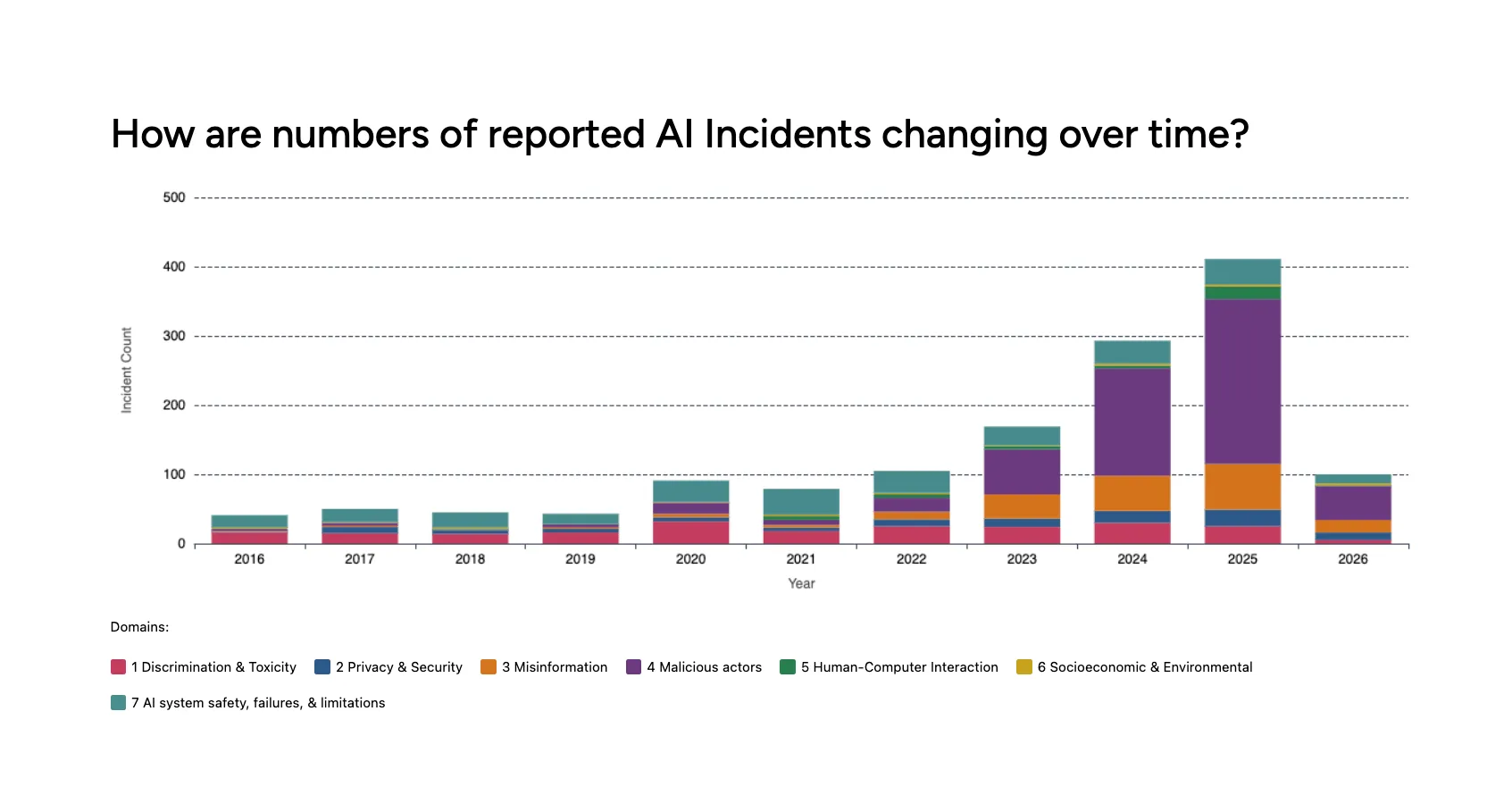
What's at stake?
The race to replace doesn't just threaten particular jobs or industries. If AI matches human capability in one domain after another over a matter of years, it represents the most rapid and total disruption in human history—to labor, to power structures, to how we know what's true, to the functioning of institutions that took centuries to build. There are vastly more ways to make complex systems worse than better. Disruption at this speed and scale isn't innovation; it's destabilization.
Children & Families
AI companions engineered for emotional attachment are being deployed to children now – optimized for engagement, not healthy development.
No safety testing is required. There is little doubt that these pseudo-relationships displace the human connections children need. We require trials before giving children new medications. We require nothing before giving them AI friends and toys designed to maximize time spent interacting.

Workers
The economic case for AI investment is labor replacement – not as a side effect, but as the explicit goal.
The target isn't just routine work; it's any cognitive labor. The standard responses to automation (retrain, move to growing sectors) presume tasks beyond automation's reach. AGI is the claim that there aren't any. What happens to workers then? And by taking away jobs, you remove people's economic leverage, power and purpose.
Truth & Knowledge
AI systems produce an increasing share of our information environment—adopted as advisors, research tools, and oracles.
The problem isn't that they're always wrong, the problem is trust. AI systems are confidently wrong in ways hard to detect, generating convincing text regardless of accuracy. As AI synthesis replaces primary sources, the foundations of shared knowledge erode. How do you verify a claim when the "source" is an AI with no traceable origin?

Concentration of Power
AI development is concentrated in a handful of companies, controlled by a small number of individuals.
If their systems become as powerful as intended, whoever controls them holds unprecedented economic, political, and coercive leverage. The current path leads to a world where a few entities control systems more capable than any human workforce or institution. No one should be trusted with such power.

Safety & Security
As AI systems grow more capable, so do the people who misuse them.
AI is already lowering the expertise needed for cyberattacks, synthetic biology, and precision-targeted disinformation. Capabilities that once required nation-state resources are becoming accessible to small groups and individuals. And the race itself is a source of global instability: nations building rival superintelligence programs have every reason to sabotage, preempt, or coerce each other. The most powerful technology ever created is being developed under the most dangerous geopolitical conditions imaginable.
End of the Human Era
For all of human history, the future has been ours to shape. Our intelligence has separated us from every other species.
The race to superintelligence bets that future on the hope that something dramatically more capable than us will remain under our control, or forever share our values. No one can explain how. If this bet fails, it fails for everyone, permanently. Even those building advanced AI believe that it is an extinction risk.

Superintelligence is where the replacement trajectory ends — not just replacing human labor, but human agency itself.
The stated destination is AI systems more capable than humans across all domains, able to improve themselves further. The safety theory for this path is "alignment" – the hope we can build systems that want what we want. But every single tech company agrees that alignment is unsolved, and may be unsolvable, for systems much smarter than ourselves. Worse, alignment is not control. Even a perfectly aligned superintelligence, operating faster and thinking deeper than any human can follow, would leave us as figureheads rather than decision-makers.
Control requires understanding what a system does, modifying its goals, enforcing boundaries, and shutting it down when needed. Each becomes difficult or impossible when the system outmatches its overseers. And almost any goal creates instrumental reasons to resist shutdown and preserve itself. This is why the race to superintelligence is self-defeating. The "winner" doesn't get a powerful tool—they get the first system no one can control. They don't gain superintelligence; they merely introduce humanity's replacement.
Two destinations. One choice.
A world in which humans are no longer in charge.
- AI systems make the decisions — economic, political, and existential — that humans can no longer understand or reverse.
- A handful of companies or states that "won" the race hold unprecedented, unaccountable power.
- Work, creativity, and social contribution are economically worthless for most people.
- Democratic institutions have no grip on systems they cannot regulate, audit, or shut down.
- Any effort to regain control requires overcoming an intelligence that can anticipate and outmaneuver it.
Extraordinarily capable AI that humans remain in charge of.
- AI augments human ability in every domain — medicine, science, creativity, governance — without replacing human judgment.
- Power over AI systems is distributed, auditable, and subject to democratic accountability.
- Work evolves; humans remain economically and socially valued contributors.
- Institutions can test, certify, and if necessary shut down any AI system deployed within their jurisdiction.
- The most capable AI in the world is also the most controllable — because that's what we decided to build.
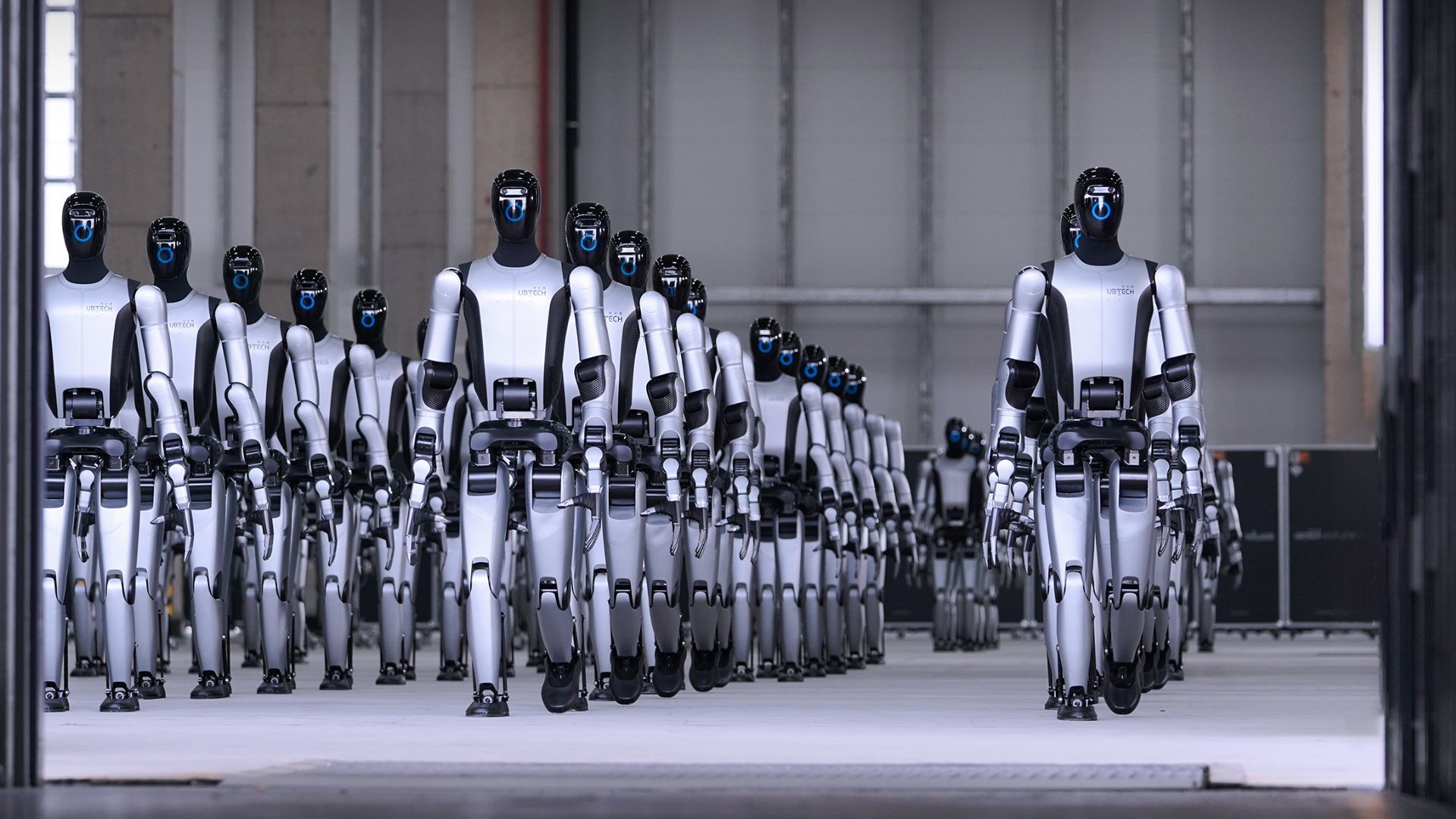
UBTech's advanced Walker S2 brings 24/7 humanoid operation to border. Source: Interesting Engineering
There's a huge gap between what the public wants, and what the industry is building
Join the chorus of voices taking a stand.
More than 136,000 people have already signed the Statement on Superintelligence, including Nobel laureates, tech pioneers, policymakers, artists, faith leaders, and public figures.
People want to have a say in their future with AI, and we believe their voices need to be heard.
The Pro-Human Path offers a way forward.
Statement on Superintelligence
Statement
We call for a prohibition on the development of superintelligence, not lifted before there is
- broad scientific consensus that it will be done safely and controllably, and
- strong public buy-in.
The public has
already decided
A national survey of 2,000 U.S. adults reveals something striking: most Americans are not happy with the path we're on.
64%
say superhuman AI should not be developed until it is proven safe and controllable.
73%
support slow, heavily regulated AI development — similar to how we regulate pharmaceuticals.
5%
are happy with the status quo of fast, unregulated development.
Choosing the better path won't be easy
The Race to Replace is being pushed by some of the most powerful corporations in our civilization. But even these are not as powerful as the rest of us, if we work together.